Asbestos certificate in Leuven
Anyone selling a home built before 2001 in Leuven needs an asbestos certificate. Bestos comes out to Leuven and to the districts of Kessel-Lo, Heverlee, Wilsele and Wijgmaal.
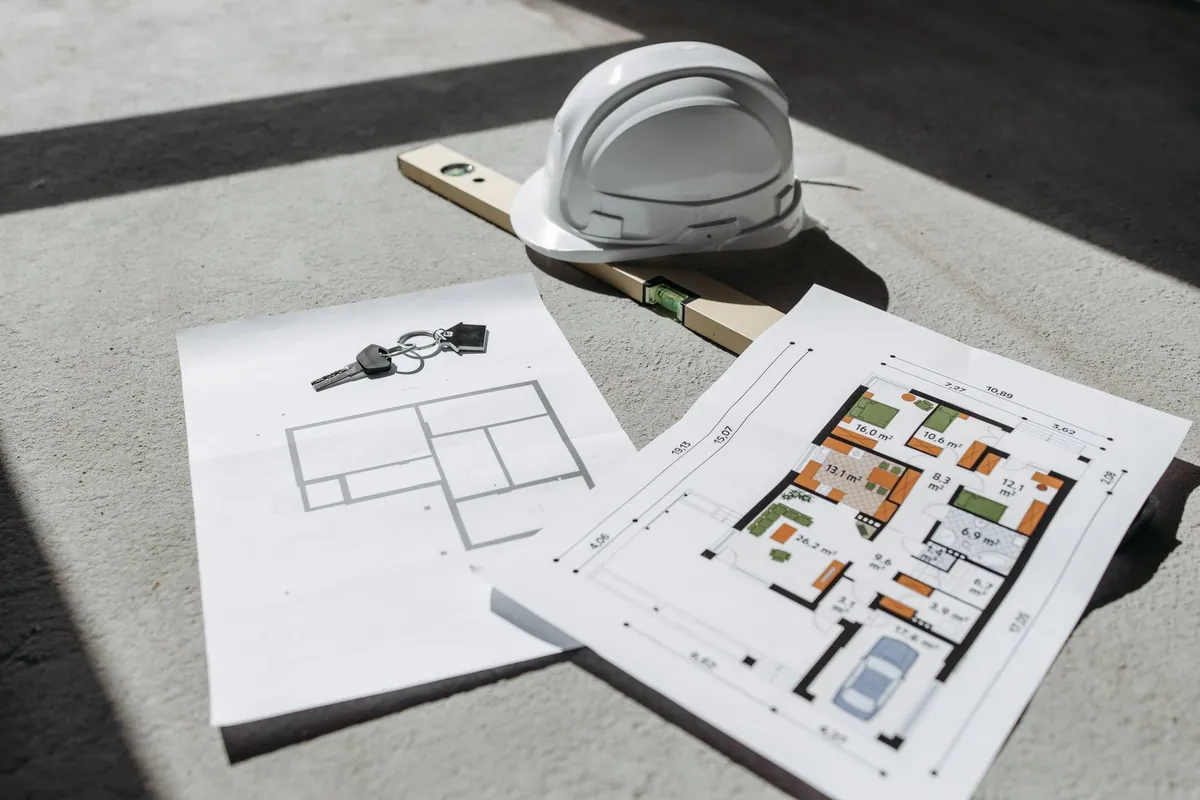
Leuven has many older terraced and townhouses in the centre, student properties and post-war homes on the edge — exactly the kind of building for which an asbestos certificate is compulsory on sale. In a non-destructive inventory we open nothing up: we assess the suspect materials on site, from roof and façade to floor and cellar, and take a sample only after consultation. Leuven is an easy run from Brussels, so an appointment is usually arranged quickly.
At what point in the sale do you need the certificate?
At the latest on signing the private sale agreement: at that moment the buyer has to know the content of the asbestos certificate.
The obligation applies to the sale of a building constructed before 2001, from 20 m² of accessible structure. Between your instruction and the certificate there are three steps: the site visit, in doubtful cases a laboratory analysis, and issue by OVAM. Those steps follow one another, even when everything runs smoothly.
If the certificate is missing at the private sale agreement, the buyer can claim the nullity of the agreement. He does not have to: he can also confirm the agreement as soon as he does receive the certificate. That choice is his, not yours.
A private sale agreement is often signed without a notary, at the estate agent's or between the parties themselves. So the deadline hangs on the date of that document, not on a notary's diary. In the notarial deed the notary then takes over the date and the unique code of the certificate; you get those details from us as soon as OVAM issues it.
How many certificates does a subdivided property need?
If you sell the property as a whole, one certificate is enough; if you sell per unit, each unit has one and the shared parts as well.
A townhouse once divided into rooms or studios counts as several building units. If everything goes to a single buyer, we record the property as one inspection zone: one certificate for the complete building, rooms and shared spaces included.
If you sell per unit, the property is split into separate inspection zones. Each unit gets its own certificate, and for what stays shared — stairwell, cellar, attic, roof — a separate certificate is drawn up for the commonly used parts. Since 1 May 2025 that certificate has to accompany the transfer, alongside the one for the unit itself.
If the property has been split into co-ownership by a deed of base, those shared parts belong to the owners association. It requests a certificate of its own, in practice through the managing agent, and must have it by 31 December 2026. From 1 January 2027, two certificates accompany the transfer of a private part: the one for the studio and the one for the common parts.
What do you have to arrange yourself as the seller?
Make sure every room is open on the day of the visit, and set out what has been altered over the years.
A room that stays shut is a room we cannot assess. In a subdivided property that means more doors than in a family home: every room, the cellar stores, the top floor, the garage box at the back, the bike store in the hallway. If you let the rooms, warn the occupants in advance and agree who opens up.
Whatever stays closed goes into the certificate as a limitation of the investigation, with the reason. For that part of the building no findings are recorded, and the conclusion of the certificate takes that into account. The buyer reads that too; removing the limitation requires a new visit, and a new certificate follows.
In a subdivided property the suspect material often sits in the traces of earlier alterations: vinyl tiles or floor adhesive under later laminate, a suspended ceiling, fire-resistant boards around a service duct, a flue that was left in place. If you know when the roof was renewed, when the rooms were fitted out or when an extension was added, that helps. Old building plans or invoices are welcome; above all they cut down the number of doubtful cases that have to go to the laboratory.
Where a Leuven sale runs aground.
Usually not on the asbestos itself, but on the timing and on doors that stay shut.
- Request the certificate before the first viewing, not after the offer.
- Without a certificate at the private sale agreement, the buyer can challenge the sale.
- A room that stays locked goes into the certificate as a limitation.
- For a studio in co-ownership, two certificates travel along from 2027.
In and around Leuven
A selection of the municipalities and districts we cover in the Leuven area. If yours is not listed, chances are we come there too.
What does a certificate contain?
The content of the document, how long it lasts and the role of OVAM.
Asbestos certificateBriefly answered.
On the sale, gift or inheritance of a building from before 2001, from 20 m² onwards.
Yes, throughout Leuven and all its districts.
We are usually on site within the week; the certificate follows shortly afterwards.
No, the existing certificate stays valid: ten years, five years where high-risk materials are listed, and indefinitely where no asbestos was found. You use it for the next prospective buyer. A fresh survey is in order if asbestos has since been removed or work has been carried out, or if the period of validity has expired.
That depends on how self-contained the units are. A studio with its own kitchen and bathroom counts as a separate building unit; rooms that share a kitchen and bathroom generally do not. We look at the layout beforehand, because the number of certificates hangs on it.
You as the owner give the instruction, even when the agent makes the appointment on your behalf. The duty to communicate the content of the certificate to the buyer stays with you.
Know the price within 24 hours.
The form takes two minutes. You get one fixed price, with no obligation.