What is asbestos?
A collective name for natural fibrous minerals used in construction for decades: cheap, strong, insulating and fire-resistant. Banned in Belgium since 1998.
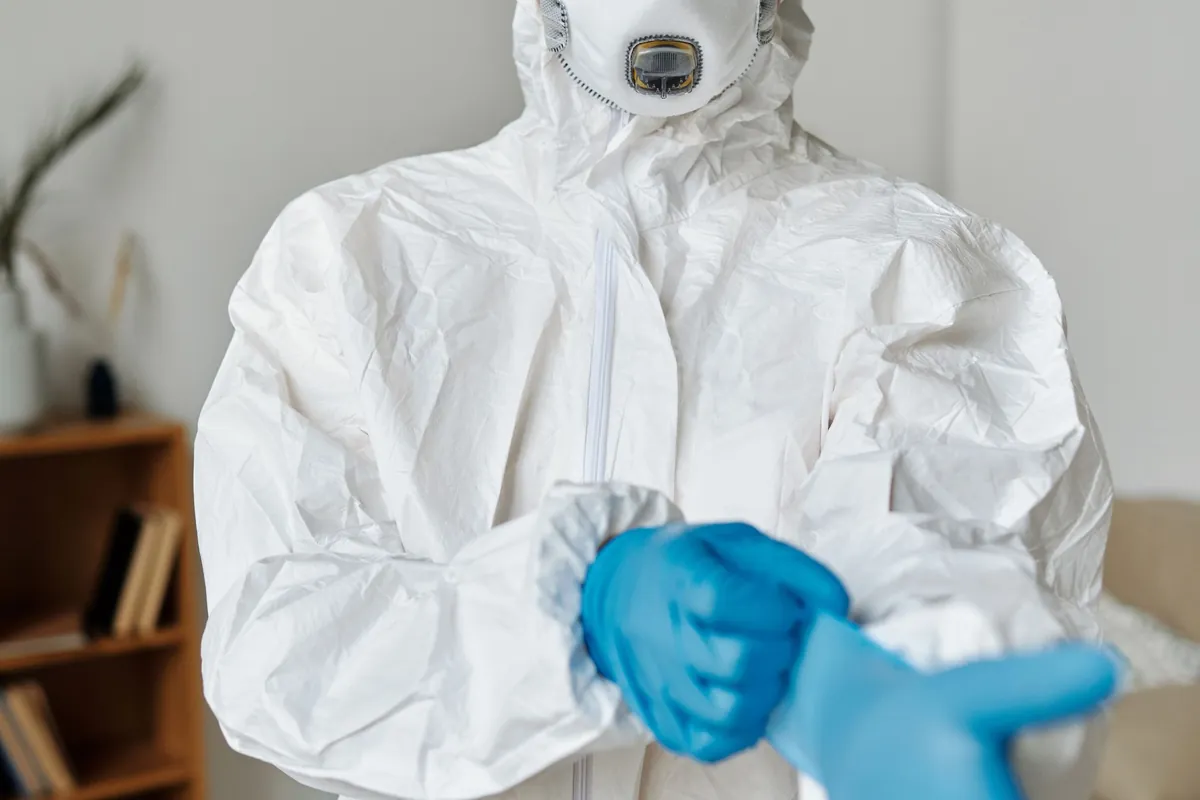
The material is not the problem. The fibres are.
Asbestos fibres are up to two thousand times finer than a hair. Once inhaled they stay behind in the lungs, where they can cause serious illness after twenty to forty years.
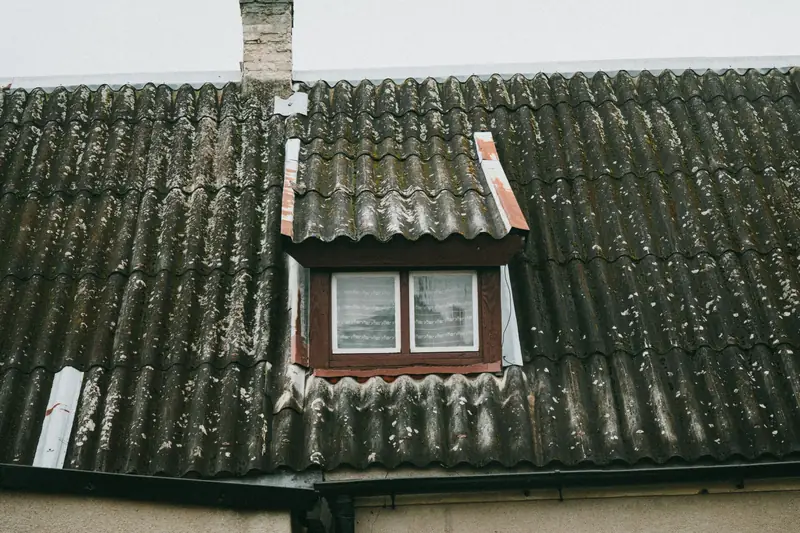
Fibres are only released when material is damaged, weathered or worked on. A corrugated sheet sitting neatly on a garden shed gives off next to nothing under normal conditions. Sawing or jet-washing that same sheet does.
Never do this: drilling, sawing, grinding or sanding into suspect material. And never jet-wash an asbestos cement roof or treat it with chemical products.
Bonded or friable.
That distinction determines nearly everything: the risk, the advice and the cost of removal.

Bonded · Non-friable
The fibres are firmly held in a binder, usually cement. Corrugated sheets, slates, façade panels, pipes and planters. In good condition the risk is low.
- Fibres are locked into cement
- Can often stay in place
- Becomes dangerous when sawn or broken

Friable · Brittle
The fibres are barely held in place. Sprayed asbestos, pipe insulation, asbestos board, rope and gaskets. By far the most dangerous type.
- Fibres are released easily
- Always by an approved firm
- A risk even on contact
Six places, one house.
Click a number to see which material sits there and what it looks like.

Fibre cement corrugated sheets or slates on the main roof. Bonded, but brittle once the material weathers.


What you may remove yourself.
Small quantities of bonded material in good condition, which you can take apart without breaking, may in principle be removed by you. Think of a few slates or a single corrugated sheet. Do take these precautions.
Is it friable material, damaged pieces or large quantities? Then call in an approved asbestos removal firm.
- Cordon off the area and wear protective clothing and an FFP3 mask.
- Wet the material so that no dust is stirred up.
- Use hand tools and pull the pieces loose one by one.
- Break nothing: keep every piece as intact as possible.
- Pack the waste airtight and separately, as hazardous waste.
With the naked eye it is almost never possible to tell whether something contains asbestos. Only material marked NT (New Technology) is guaranteed free of asbestos. For everything else there is one certainty: an analysis by an accredited laboratory.
Unsure about a material?
We take the sample according to protocol. An accredited lab gives a clear answer within a few working days.